
Vunavadra Island, the home of South Sea Island is a prominent island that is well known in the Mamanuca region as a favourite spot for day trippers. In- house guests on Denarau Island hotels, Nadi area and even to the Coral Coast opt for a day trip to the island because of its location and also the range of activities provided. It is a thirty five minutes boat ride to the island from Denarau Marina and is located 19 to 20 kilometers from Nadi.
Relatively small in size and with very limited space, about 80 – 100 day trippers flock to the island daily for a day of relaxation away from their normal busy lives. Everyday the small coral cay that rises up from lapping tides is subjected to human activities that leave the island vulnerable to various environmental risks.
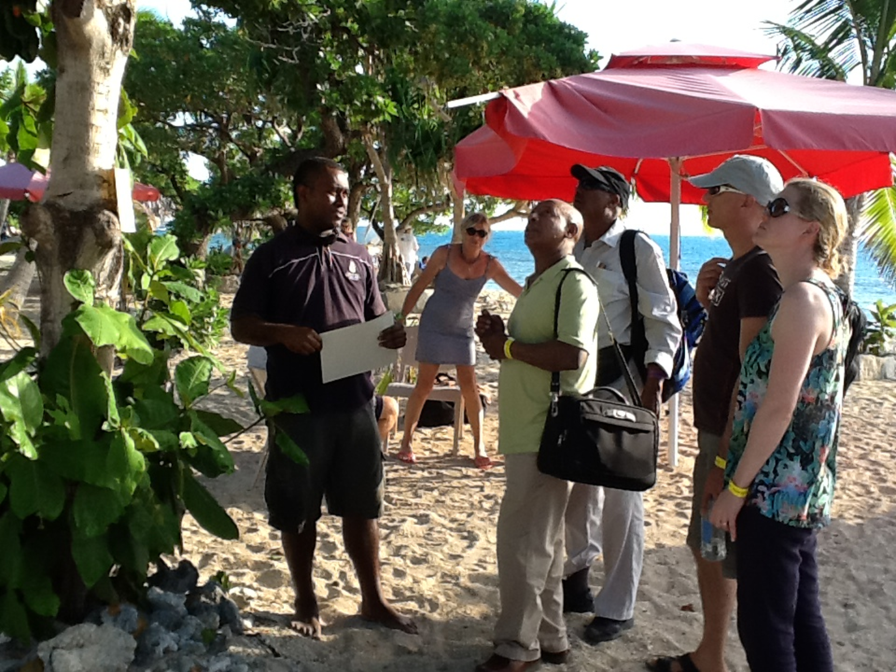
To avoid this, South Sea Island has adopted an environment program, the exact program that they used to engage in 2 – 3 years ago. On Thursday July the 11th, South Sea Island started its initial weekly environment days whereby all the MES Staff, island staff and guests came together and conduct activities that could contribute, improve and most importantly sustain the natural status of the island. On this day, the main activity that was done is the Guided Medicine Walk at 11am and 4pm and Tree Planting which was done at 2pm, just after guests had their lunch. The day was named “South Sea Island Environment Tree Day” because the main activity involved trees surrounding the island.
Participating guests enjoyed the activity and asked a lot of questions regarding medicinal trees. Alan Duthe, an old man from New Zealand on a holiday in Fiji and Kate McKenzie, a little girl from Australia were the only guests that took part in Tree Planting. Opting out of their activities provided to them by SSI, the two guests actively participated in which they were able to plant 1 Coconut tree (Niu), 4 Beach Almond (Tavola), 1 Chinese Lantern Tree (Evuevu) and 1 Leucaena Tree (Vaivai). The planting was done on the South end of the island because it was barren and planting trees on that area would help hold the sand together during storms.
Another medicine tour was done at 4pm and this was for guest who came in on the 12pm boat to spend the second half of the day on the island. Ten trees were selected and their medicinal value was the center of discussion during the tour. The guests were told that ancestors in Fiji did not have access to hospitals and highly qualified doctors and nurses like we have today Through their traditional knowledge of herbal medicines they cured their sicknesses and diseases. At the end of the day during de- brief time, participants were awarded Certificates of Participation which was presented by Sala, the Island Manager on Duty.
Soropepeli Seru
