
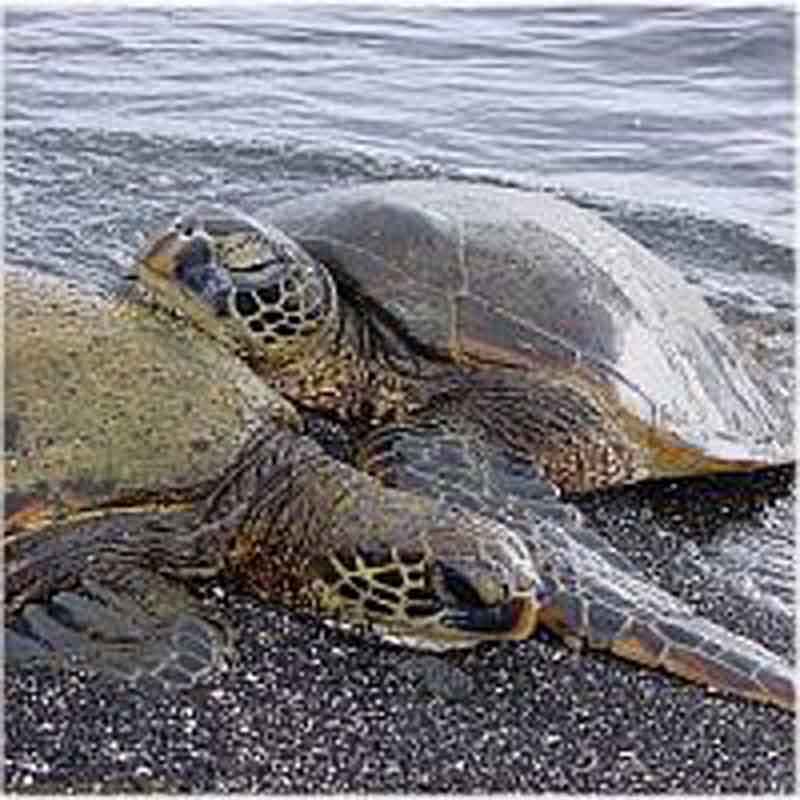
The number of sea turtles sighted in the Mamanuca Group of Islands has increased dramatically this year.
And recent research in the 23 islands of the Mamanucas has also shown a major change in the nesting behaviour of these magnificent creatures.
The traditional nesting session for sea turtles in Fiji is from October to April but the trend has changed in the Mamanuca this year.
Betani Salusalu, the Project Manager for the Mamanuca Environment Society said “The waters around the Mamanuca are absolutely perfect at the moment for turtles but we have seen another progress which is not only exiting but very encouraging.”
“We have noticed that nesting continue throughout the year. Some of the nesting sites like South Sea Island, Vomo Island, Tavarua Island and Monuriki Island are still experiencing hatchling even though it’s the nesting session.”
Mr Salusalu said this reflect MES’s Turtle Project’s initiative, programme and monitoring in the Mamanuca Islands.
“It also reflected the commitment of our local communities, Tourism and our Resort stakeholders together with our local school programme that has taken the milestone to protect and conservation some of our Culture and Tradition Icon and endangered Sea Turtle Species. For the past few months, boat operators, tourists and villagers have seen huge sea turtles feeding and floating along this water which was not seen in those years,”
The MES’s Turtle Project funded by UNDP Global Environment Fund Small Grants Project in 2008 to 2010 revealed 19 nesting sites and foraging grounds out of the 23 islands in the Mamanucas.
Meanwhile, Mr Sausalu is calling for a halt to the sea turtle killings for domestic use in other parts of Fiji.
He said the recent news that some turtles were allegedly killed in Vanua Levu and the rescue of three green turtles on an island in Tailevu in September is shocking.
Mr Salusalu said the nesting period for all species of turtles run from October to April each year and this should be a strictly no-take period as outlined in The Fisheries Act Cap 158 and its amendment regulation (Protection of Turtles Regulation).
“It is only from June to August, a permit maybe acquired through the Ministry of Fisheries for turtle harvesting strictly for significant traditional events like the installation of district or paramount chief or the death of a chief. I believe the authority should get their act together and see that those who break the law should be punished so others can learn.” said Mr Salusalu.
According to the Fiji moratorium on molesting, which came into effect in March 2004 and expires on December 31, 20018, people caught harvesting turtles, molesting them or killing the eggs without a permit may be prosecuted and face three to six months in prison and a fine of up to FJ$500.
Anyone caught selling turtles can be fined FJ$20,000 or face a prison sentence of five years.
